uMkhomazi Water Project Phase 1 progresses

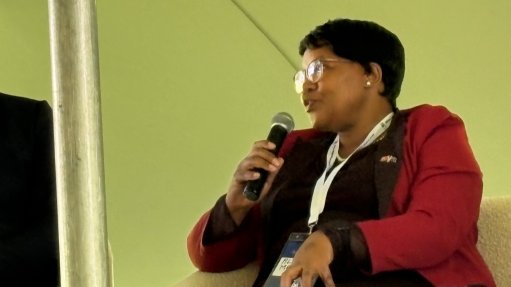
Trans-Caledon Tunnel Authority project finance specialist Thabani Nomvalo discusses the uMkhomazi Water Project Phase 1, a major bulk water infrastructure scheme in KwaZulu-Natal.
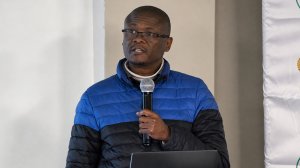


The construction of the R27.5-million uMkhomazi Water Project Phase 1 (uMWP-1), a major bulk water infrastructure scheme in KwaZulu-Natal, is set to start in January 2028, a year after the planned issue of the construction tender in January 2027.
The expectation is that the project will start delivering water in July 2032, said Trans-Caledon Tunnel Authority (TCTA) project finance specialist Thabani Nomvalo during Department of Water and Sanitation (DWS) sector-specific consultations on the proposed 2027/28 raw water tariffs on Thursday.
The DWS raw water tariff consultation, held in Pretoria, is a part of the department’s yearly process of setting raw water use charges, and provided stakeholders an opportunity to provide input.
Discussing the uMWP-1 and its proposed tariffs, Nomvalo noted that the professional service providers (PSPs) / consultants’ contracts for the project’s tunnel and dam were awarded in 2024.
“Our colleagues from the project management and implementation division at the TCTA are planning to issue construction tender documents to the market in January 2027, and construction is scheduled to start in January 2028,” he explained.
The cost estimate for the project remains at R27.5-million, based on the feasibility study. That number may change once the detailed designs are completed.
Currently, the PSPs are undertaking the geophysical survey, specifically ground-based surveys; however, there have been some challenges with access in some of the project sites, in particular, in KwaZashuke, Nomvalo highlighted.
“We are working with the DWS to get the Minister's intervention to assist us to be able to go into that into that community. That is where the dam will be. So there has been some challenges there.”
Other activities include engagements with the landowners affected by the dam basin to obtain access for investigations and studies, as well as the assessments of the tunnel-boring machine advance rates across different rock types.
“With respect to the dam, all drilling has been completed, and the PSP is now completing the rehabilitation work in the disturbed areas,” he added.
The revised design criteria memorandum for both the dam and tunnel will be submitted to the DWS for consideration.
Turning to the institutional arrangements, Nomvalo said that the TCTA entered into an implementation agreement with the DWS in January 2025, when a raw water supply agreement was also between the DWS and uMngeni-uThukela Water.
“There is a unique framework agreement between the DWS, the TCTA, uMngeni-uThukela Water and the user municipalities, signed in April 2024, which was necessitated by the municipalities insisting that the TCTA and the DWS have certain reporting obligations, and those were then accommodated in this in this framework agreement.”
Water user agreements were also signed with user municipalities in April 2024.
“We obtained approval for the project following a limited accounting guarantee in December 2024, and we have recently concluded a guarantee framework agreement between the DWS, National Treasury and the TCTA,” he continued.
“Our tariffs are set in line with these project agreements, and the tariff is contractually agreed,” he said, pointing to the project’s unique funding model in that government agreed to effectively subsidise the project, as the project was challenged by end-user affordability.
Under a blended funding model, the Budget Facility for Infrastructure approved facilities totalling R12-billion, namely a R6-billion non-repayable grant and a R6-billion interest free loan, which will be channelled through the Infrastructure Finance and Implementation Support Agency.
“This is the only project funded by the TCTA that has this funding mechanism.”
The TCTA is in the process of raising off-budget funding to cover the balance of the project costs, repayable by the water users.
“The plan is that we will first use the tariff income, then the fiscal funding and then later draw down on the commercial loans. The intention is to reduce interest accumulation, and hopefully reduce tariffs in future as well.
“We have a government guarantee of R22.9-billion, and because of this funding model, interest as a percentage of total project cost will only amount to just less than 10%, whereas under our other projects, the interest amounts to over 50%,” he said, highlighting the benefit of this fiscal contribution.
In terms of the tariff principle, the project is ring-fenced and has specific object agreements with the municipalities.
Nomvalo said that a 4.75% increase in tariff’s for the project, which is a 0.25% margin above Consumer Price Index (CPI), to be used to fund a part of the capital expenditure and to service interest during construction.
The intention is that the projected tariffs are reduced during the operational phase of the project.
The DWS’s sector-specific consultation on the raw water use charges for the 2027/28 financial year covers three key areas: Water Resource Management Charges, which fund water resource protection and management; Water Resource Infrastructure Charges, which support the development, operation, and maintenance of government water infrastructure; and the Water Research Levy, which funds water-related research through the Water Research Commission.
The consultation provides a dedicated platform for representatives of different water-user sectors to deliberate on the proposed charges and related matters, and to present their positions before recommendations are finalised and submitted to the Water and Sanitation Minister for consideration and approval.
Article Enquiry
Email Article
Save Article
Feedback
To advertise email advertising@creamermedia.co.za or click here
Projects

Latest Multimedia
Latest News
Showroom

Sika South Africa is a trusted partner for the nation’s infrastructure, commercial, residential, and industrial sectors.
VISIT SHOWROOM
The Aluminium Federation of South Africa (AFSA), is the voice of the South African aluminium industry.
VISIT SHOWROOM
Press Office
Announcements
What's On
Subscribe to improve your user experience...
Option 1 (equivalent of R125 a month):
Receive a weekly copy of Creamer Media's Engineering News & Mining Weekly magazine
(print copy for those in South Africa and e-magazine for those outside of South Africa)
Receive daily email newsletters
Access to full search results
Access archive of magazine back copies
Access to Projects in Progress
Access to ONE Research Report of your choice in PDF format
Option 2 (equivalent of R375 a month):
All benefits from Option 1
PLUS
Access to Creamer Media's Research Channel Africa for ALL Research Reports, in PDF format, on various industrial and mining sectors
including Electricity; Water; Energy Transition; Hydrogen; Roads, Rail and Ports; Coal; Gold; Platinum; Battery Metals; etc.
Already a subscriber?
Forgotten your password?
Receive weekly copy of Creamer Media's Engineering News & Mining Weekly magazine (print copy for those in South Africa and e-magazine for those outside of South Africa)
➕
Recieve daily email newsletters
➕
Access to full search results
➕
Access archive of magazine back copies
➕
Access to Projects in Progress
➕
Access to ONE Research Report of your choice in PDF format
RESEARCH CHANNEL AFRICA
R4500 (equivalent of R375 a month)
SUBSCRIBEAll benefits from Option 1
➕
Access to Creamer Media's Research Channel Africa for ALL Research Reports on various industrial and mining sectors, in PDF format, including on:
Electricity
➕
Water
➕
Energy Transition
➕
Hydrogen
➕
Roads, Rail and Ports
➕
Coal
➕
Gold
➕
Platinum
➕
Battery Metals
➕
etc.
Receive all benefits from Option 1 or Option 2 delivered to numerous people at your company
➕
Multiple User names and Passwords for simultaneous log-ins
➕
Intranet integration access to all in your organisation